Singapore’s healthcare direction is changing fast, and the numbers show why. In a single year, Singapore spent over SGD 10 billion treating chronic disease, and the government has acknowledged that this model cannot continue. In the 2026 Budget, S$22.5 billion was allocated to healthcare, up 10.4 per cent on the year before, while funding for preventive care and health promotion rose by 18 per cent. At the same time, medical costs in Singapore have been rising at 12 per cent annually for the third consecutive year. Together, these signals point to an accelerating shift toward prevention, measurement, and earlier intervention rather than late-stage disease management.
That shift is visible in consumer behaviour and market movement. Singapore’s health check-up market was valued at USD 298.6 million in 2024 and is projected to reach USD 496.5 million by 2030, representing 8.8 per cent annual growth. Within this, preventive health check-ups are described as the fastest-growing segment, reflecting demand for early assessment and proactive care. Research from the National University of Singapore projects that, without intervention, chronic conditions including diabetes, hypertension, heart disease, and disability will all increase through to 2050. The same work found sustained lifestyle interventions could save up to USD 505 million in healthcare costs over that period, underlining why prevention is now being treated as a quantified strategy.
From Screenings to Geroscience: What “Longevity” Care Looks Like Now
Public-sector trials and clinic models are helping define the new playbook. Alexandra Hospital’s Healthy Longevity Research Clinic, which opened in 2023, uses advanced diagnostics and personalised lifestyle plans to manage ageing as a condition, aiming to delay health decline. In one example from a one-year programme, a participant entered at age 71 with a biological age of 67 and reached a biological age of 65 by the time his chronological age was 72, alongside changes in exercise and diet. Clinicians in this space use tools such as biological age monitoring, microbiome analysis, and functional measures including cardiorespiratory fitness tests, then link results to targeted exercise regimes and behaviour change rather than quick fixes.
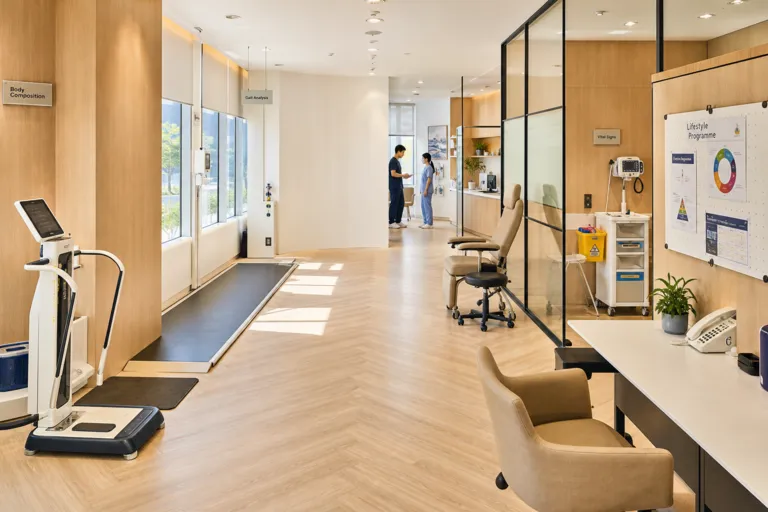
Private providers are scaling similar ideas, while adding executive-health style diagnostics and longitudinal tracking. This is where Longevity Clinics Singapore have become a visible signal of the preventive turn: clinics are positioning ageing as a process to be measured, managed, and where possible, modulated. One report describes physician-led assessments paired with tracking of blood biomarkers, bone density, and cardiovascular health, as well as metabolic profiling and imaging technologies used for earlier insight. Major groups and new entrants are also expanding access points. In early 2026, Raffles Medical Group launched a healthy longevity clinic, while IHH Healthcare introduced Healthspan, offering biological age testing across Parkway Shenton clinics and advanced longevity evaluations at executive screening centres.
Still, the rise of high-end offerings brings scrutiny alongside excitement. Commentary on Asia’s luxury longevity boom warns that public enthusiasm can outpace the science, noting that some clinics advertise regenerative and anti-ageing stem cell treatments without published outcome data or named medical directors. In Singapore’s broader demographic context, the Ministry of Health projects that one in four residents will be over 65 by 2030, sharpening the question of who can access evidence-based prevention at scale. Another practical constraint is payment: private health insurance in Singapore generally classifies elective longevity treatments as non-claimable, while GLP-1 drugs may be reimbursed only when prescribed for diabetes or obesity under clinical guidelines. The clearest throughline is that the most reliable levers remain sustainable habits, supported by better diagnostics and earlier, structured care.
What is driving the shift toward preventive aging care in Singapore?
How fast is Singapore’s health check-up market growing?
What do longevity-focused clinics in Singapore typically measure?
What does the growth of longevity clinics in Singapore mean for access and evidence?
How are Longevity Clinics Singapore linked to national ageing pressures?