Moving cancer screening upstream means finding actionable signals sooner, before disease management becomes more complex. In Vietnam, molecular testing is increasingly positioned for that earlier role because it can check for specific proteins, genes, or other molecules that may be a sign of cancer. A Vietnam-focused market assessment values the country’s molecular diagnostics market at approximately USD 100 million based on a five-year historical analysis, and it describes rising demand for accurate results across infectious disease testing, oncology panels, and genetic screening. This shift matters for screening strategies because it places molecular methods closer to first-line decision points in public health laboratories, hospital laboratories, and large private diagnostic chains.
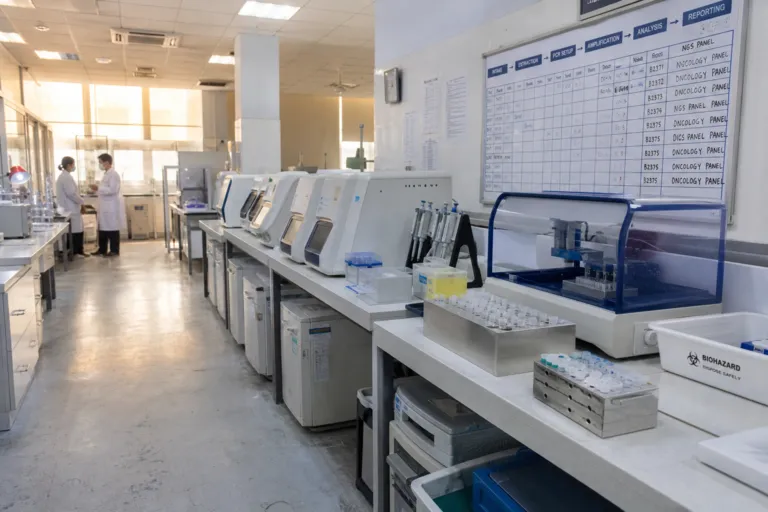
Within Vietnam’s molecular diagnostics product mix, reagents and kits are described as the most significant contributors to market growth, in part because they are essential and recurring in routine testing. The same source links higher use to demand for accurate diagnostic results, including oncology panels and genetic screening, which are directly tied to earlier identification and risk assessment. On the technology side, polymerase chain reaction (PCR), particularly real-time PCR, is said to dominate because of its wide application and its ability to provide rapid and highly sensitive results. While this dominance is often associated with infectious disease needs, the same infrastructure, workflows, and procurement patterns can also support earlier oncology testing pathways when clinicians choose molecular options earlier in the diagnostic journey.
Why Market Momentum Matters for Earlier Detection
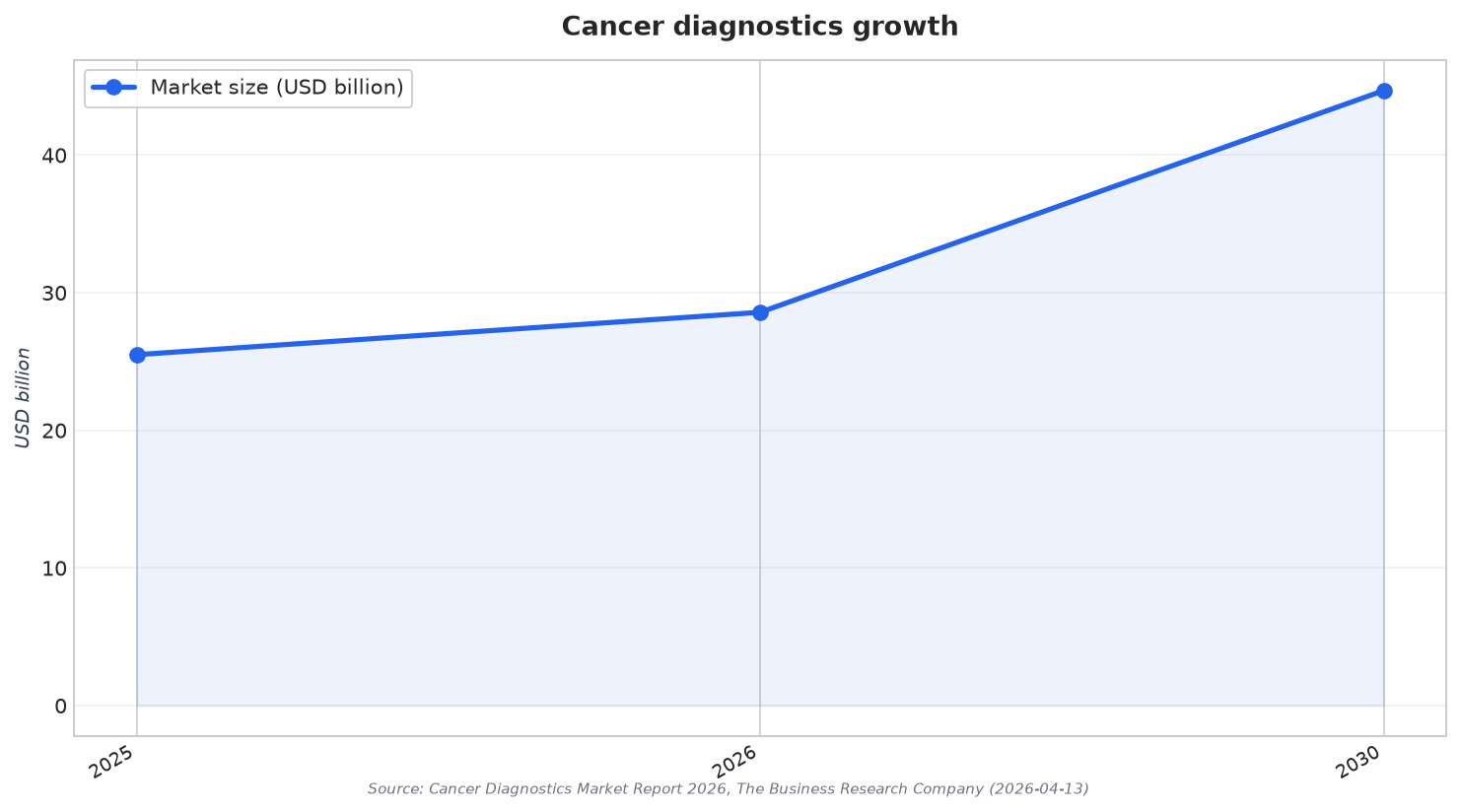
Broader market context reinforces why upstream screening is gaining attention. A global cancer diagnostics report sizes the cancer diagnostics market at $25.5 billion in 2025 and projects growth to $44.69 billion in 2030, with molecular diagnostics listed as a main product category within cancer diagnostics. Separately, a global molecular diagnostics report values the molecular diagnostics market at USD 26.96 billion in 2025 and forecasts it will reach nearly USD 43.69 billion by 2032. Another molecular diagnostics outlook projects growth from $18.88 billion in 2026 to $38.62 billion by 2034 and highlights increased cancer screening and the use of liquid biopsy as demand catalysts. These figures are global, not Vietnam-specific, but they show a clear direction of travel that Vietnamese providers and lab networks can align with as adoption grows.
Multiple sources describe technology choices that can support upstream cancer pathways. Vietnam market coverage points to adoption of PCR-based assays, next-generation sequencing (NGS), and point-of-care molecular diagnostics, with increasing use in personalized medicine, oncology, infectious disease management, and genetic screening. The shift of molecular testing toward faster, decentralized settings is also described as a wider market trend, especially for point-of-care use. For Vietnam, this matters because earlier detection is not only about test sensitivity; it is also about access, turnaround time, and repeatability of testing protocols across hospital and diagnostic laboratory settings. When workflows move from centralized labs to more accessible points of care, testing can fit earlier in the patient journey.
Competition and capability-building are also part of the upstream screening story. Vietnam’s molecular diagnostics landscape includes a mix of regional and international participants, such as Roche Diagnostics Vietnam Co., Ltd., Abbott Diagnostics Vietnam, Siemens Healthineers Vietnam, Thermo Fisher Scientific, Bio-Rad Laboratories, QIAGEN, BD, BGI Genomics Vietnam, Cepheid (a Danaher company), Illumina, and Sysmex Vietnam Co., Ltd., among others listed in Vietnam market coverage. The same source points to ongoing technological advancements, increasing healthcare investments, and expectations that government efforts to enhance healthcare infrastructure, particularly in rural areas, may facilitate greater access to molecular diagnostics. Combined with anticipated integration of artificial intelligence in diagnostic processes to improve accuracy and efficiency, these dynamics support a practical shift: bringing molecular methods earlier, and making upstream cancer screening more feasible across settings.
What does “upstream” cancer screening mean in the context of molecular testing?
How large is Vietnam’s molecular diagnostics market in the cited sources?
Which technology is described as dominating molecular diagnostics use in Vietnam?
What global figures provide context for Molecular Diagnostics Vietnam and cancer screening trends?