AI radiology diagnostics in Vietnam are developing inside a wider, fast-moving imaging software market. Ken Research values Vietnam’s medical image analysis software market at USD 160 million, citing advanced imaging technologies, AI adoption, rising healthcare expenditure, and a growing emphasis on early disease detection and diagnosis. Today, demand is concentrated in the biggest cities. The same source says Ho Chi Minh City and Hanoi dominate due to advanced healthcare infrastructure and a concentration of medical facilities that invest in state-of-the-art imaging technologies. That urban concentration sets the baseline challenge: making AI-supported interpretation and reporting practical outside top-tier city hospitals.
Global market signals also explain why health systems keep looking at radiology AI first when they want measurable operational impact. MarketsandMarkets projects the global radiology AI market will reach USD 2.27 billion by 2030, up from USD 0.76 billion in 2025, growing at a CAGR of 24.5%. It links growth to a shortage of trained radiologists and high patient volumes, creating demand for tools that triage cases, automate routine tasks, and enhance diagnostic efficiency. In that same report, North America is stated to dominate with a 39.5% share in 2024, which is useful as context, but not a Vietnam-specific indicator.
What “Beyond Urban Hospitals” Requires: Workflow, Integration, and Compliance
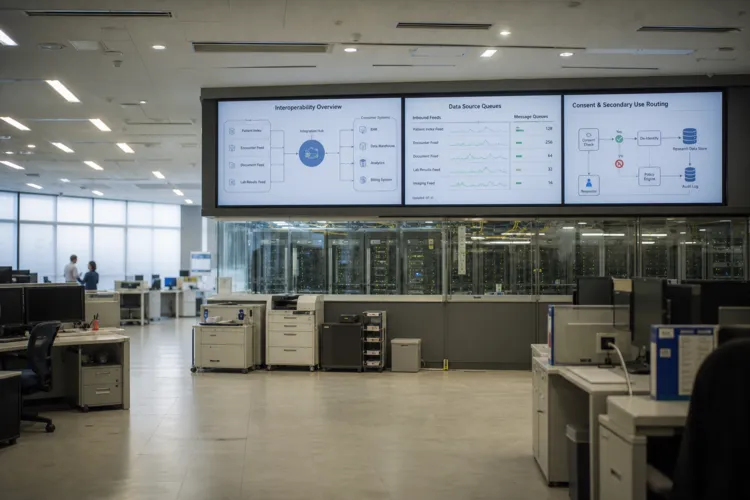
Moving beyond large city facilities is less about a single algorithm and more about deployment design. Vietnam already has an IT policy push that can support scaling imaging software usage. Ken Research notes that Circular 54/2017/TT-BYT (2017) issued by the Ministry of Health mandates the application of information technology in hospital management, including integrating medical imaging software as part of electronic health record systems. The regulation requires hospitals to implement digital systems for patient data management, including imaging results, with compliance thresholds for public hospitals above a certain bed capacity and standards for data interoperability. That type of interoperability focus can make it easier to spread AI-enabled imaging tools across connected sites.
Buyer behavior also points to where adoption pressure will come from first. A 2026 market outlook on AI in diagnostics says hospitals are the dominant global buyers and deployers of AI diagnostic tools, accounting for 57.88% of total market revenue in 2025, driven by radiologist shortages and imaging backlogs. Grand View Research similarly reports the hospitals segment held 48.1% of the AI in radiology market in 2025, while diagnostic imaging centers are the fastest-growing segment. For Vietnam, that implies a practical route outward: start with hospital-led deployments that connect to imaging centers and, over time, extend access to interpretation support where staffing is tight and workflow standardization is needed.
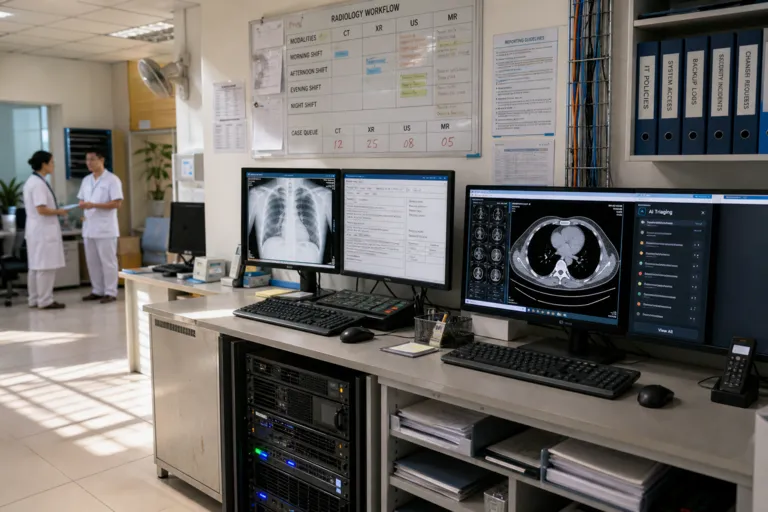
The direction of product design matches that scaling logic. MarketsandMarkets says diagnostic imaging and interpretation accounts for the largest share, CT is estimated to account for the largest modality share, and oncology is projected to be the largest indication segment during the forecast period. Ken Research also states oncology applications are leading in Vietnam’s image analysis software segmentation, driven by the need for precise imaging for diagnosis and treatment planning. Together, these signals suggest that AI Radiology Diagnostics Vietnam efforts may find early traction in integrated, oncology-relevant workflows—especially when solutions are PACS-integrated or cloud-based, as Grand View Research notes such approaches streamline workflow by embedding analysis into existing radiology systems.
How big is Vietnam’s medical image analysis software market?
Which cities currently dominate imaging software demand in Vietnam?
What regulation supports wider hospital IT and imaging software integration?
Why do hospitals matter so much for scaling AI in radiology?
What does the AI Radiology Diagnostics Vietnam push mean for “beyond urban hospitals”?