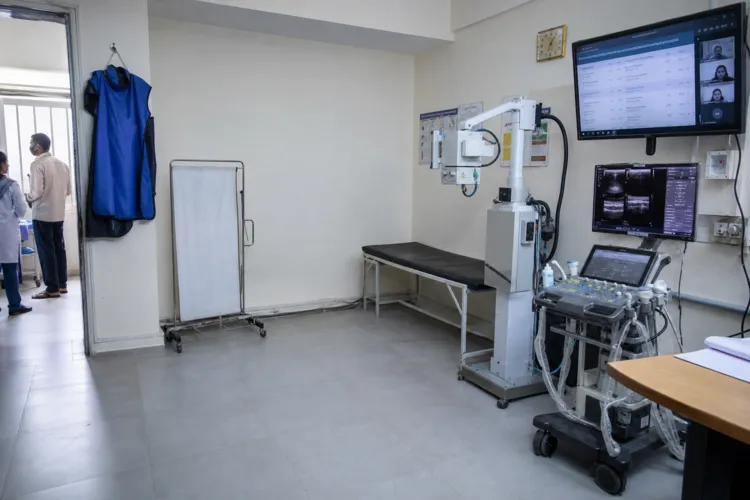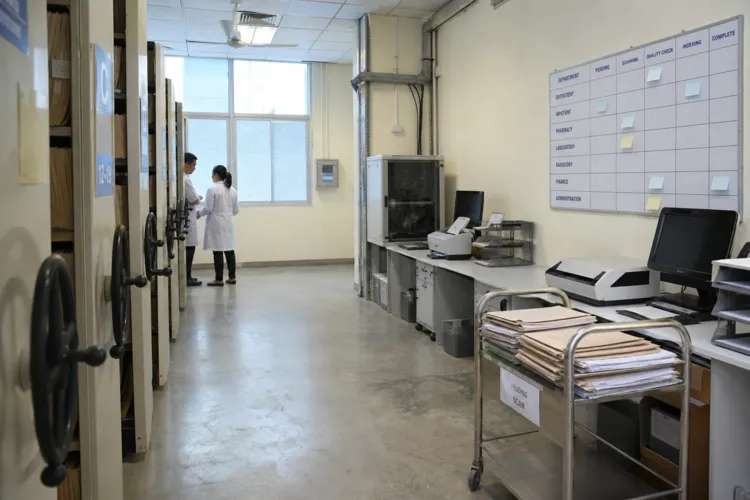
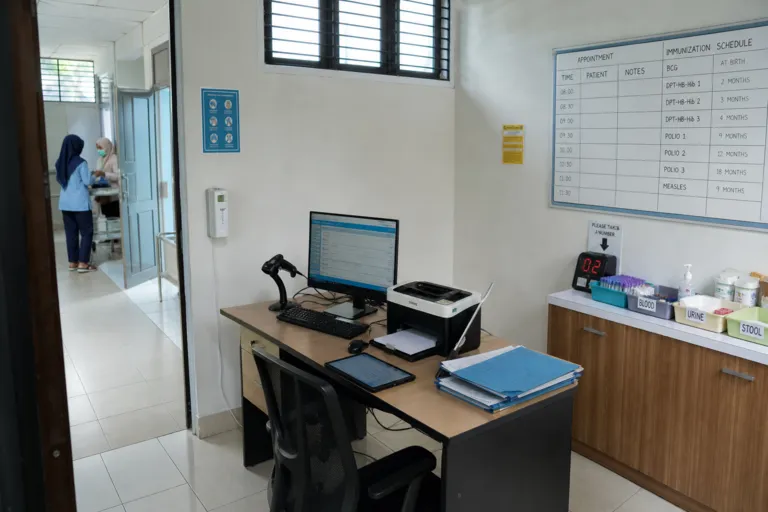
Primary Care Digitization Indonesia is increasingly tied to the country’s universal health coverage direction and to how quickly frontline services can connect to national systems. Near-universal baseline coverage under BPJS Kesehatan’s JKN reached 283 million participants, equal to 99.34% of the population by October 2025. That scale raises the stakes for clean data, predictable workflows, and reliable reporting in everyday primary care encounters. Indonesia’s care delivery structure also puts primary care at the center: the healthcare system includes more than 10,000 puskesmas that act as primary care gateways under JKN, alongside over 2,500 hospitals.
Digitization pressure is not only operational; it is regulatory and procurement-driven. Indonesia’s Ministry of Health Regulation No. 24/2022 on Health Information Systems mandates phased electronic health record (EHR) adoption across all hospital tiers by 2030. Market tracking suggests adoption of advanced, interoperable EHR systems currently reaches roughly 30–40% of Indonesia’s 2,500+ hospitals, while adoption in puskesmas is still below 15%. In the same market view, integration with BPJS Kesehatan claims and payment systems is becoming a mandatory procurement criterion, pushing vendors toward HL7 FHIR and open API capabilities. Those requirements matter because fragmented data exchange remains a critical barrier when standards differ across facilities.
What Will Make Primary Care Digitization Work at Scale
Evidence reviews on digital health in Indonesia emphasize that the managerial task is not simply adopting more tools, but governing a portfolio of services toward measurable public value. Interoperability shows up as a recurring issue: Indonesian primary care evidence suggests that many health information systems operate simultaneously, which can complicate continuity and reporting. The same literature also warns that without safeguards, digital health may improve average performance while widening gaps, so equity and governance need to sit alongside technology. It also notes that much local evidence focuses on feasibility, readiness, usability, and acceptance, and that future work should move toward measuring clinical outcomes, continuity of care, cost-effectiveness, staff workload, patient safety, data quality, and long-term adoption.
Implementation capacity is another constraint that directly affects primary care timelines. Budget constraints can slow procurement cycles, and a typical tender for a mid-range EHR system can face 6–12 month delays due to approval processes. The same market analysis flags a shortage of skilled IT professionals and clinical informaticians who can implement, customize, and maintain EHR systems, which can raise total cost of ownership and stretch project schedules. On the supply side, import dependence remains high at an estimated 70–80% for core hardware components and enterprise software platforms, creating supply chain exposure even as it opens opportunities for local assembly and cloud-based solutions.
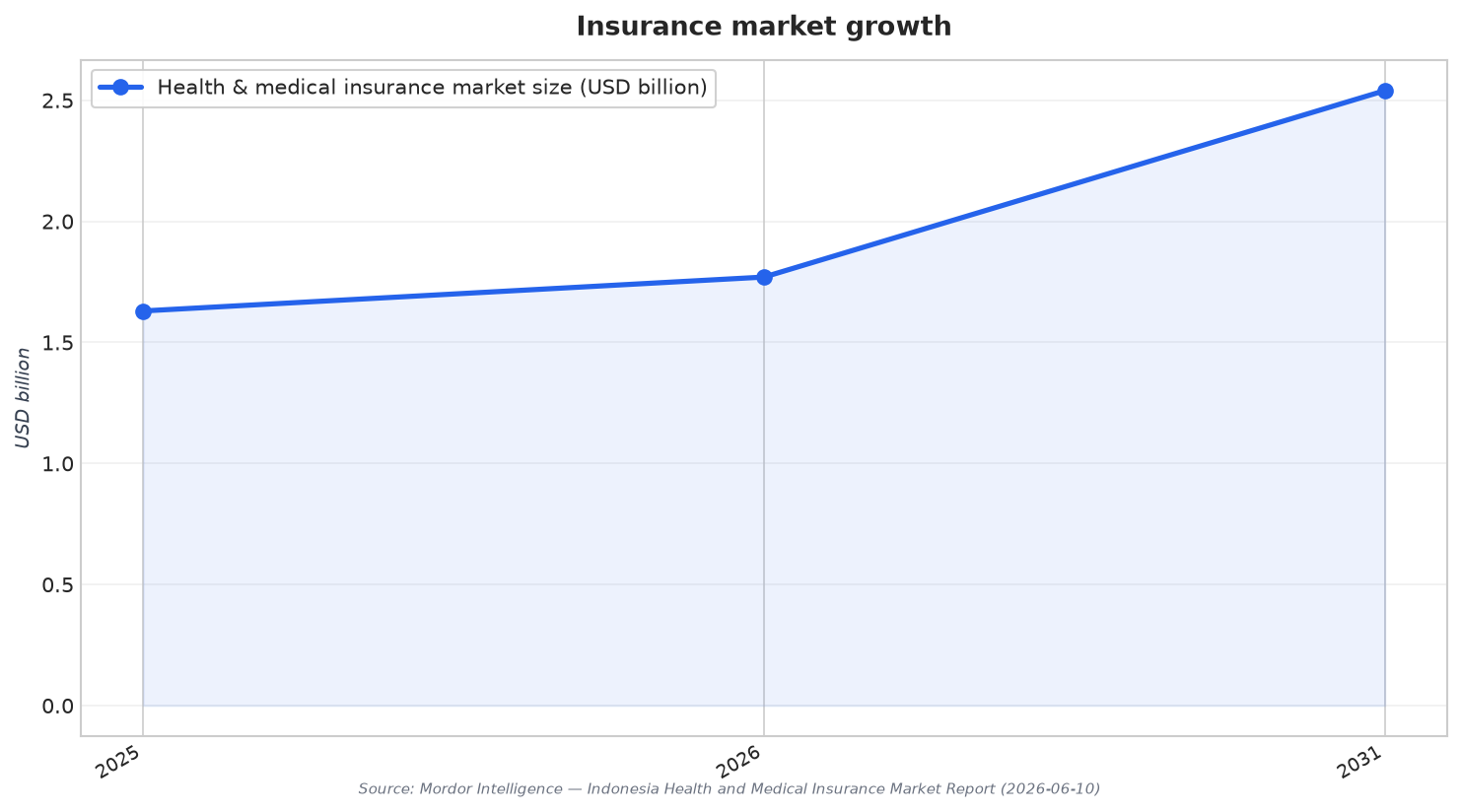
Insurance and service delivery digitization are moving in parallel, reinforcing expectations for digital capability. In the Indonesian health and medical insurance market, conduct standards and product governance are set to strengthen as OJK implements POJK Number 36 of 2025 in January 2026, which mandates medical governance, utilization review, and digital capabilities across all health insurers. Distribution is also modernizing through Financial Service Aggregators licensed by OJK, reaching 20 registered providers with 1,172 institutional partnerships and serving 13.10 million users in August 2025. Meanwhile, public-private initiatives signal momentum: in January 2023, GE HealthCare partnered with Indonesia’s Ministry of Health and the U.S. Trade and Development Agency to support digitizing healthcare delivery for remote diagnosis and treatment of underserved communities across Indonesia.
How does primary care digitization in Indonesia connect to universal access?
What do current EHR adoption levels look like across Indonesia’s facilities?
Which policy is pushing EHR implementation forward in Indonesia?
What are common blockers for digitizing primary care workflows?
How are insurers influencing health digitization requirements?