Thailand’s push to become a medtech manufacturing and export leader is gaining momentum, and the signals span markets, trade, and industry coordination. Informa Markets will stage International Healthcare Week in Bangkok from 8–10 July 2026, co-locating WHX Bangkok and Medtec Southeast Asia 2026 at the Queen Sirikit National Convention Center. The organizer expects more than 950 exhibitors from over 35 countries across 30,000 square metres, reinforcing the country’s profile as a hub for healthcare and medical manufacturing. This direction aligns with the Thai Government’s “Ignite Thailand” strategy to establish Thailand as a regional centre for healthcare and medicine.
Regional growth projections add context to Thailand’s ambition. One outlook cited for the region values the Asia Pacific medical device market at USD 127 billion in 2025 and describes it as set to nearly double over the next decade. In Southeast Asia, the MedTech market is projected to expand at an annual rate of 7.31%, reaching USD 18.6 billion by 2029. Against that backdrop, Thailand is described as the world’s 20th largest medical device exporter and home to a domestic market worth over USD 2.23 billion in 2024. Those points support the case that Thailand can play both roles at once: scaled manufacturing and gateway distribution to nearby ASEAN demand centers.
Why Exports Look More Achievable Now
Export readiness depends on production depth, import patterns, and where higher-technology devices still come from. In 2024, Thailand’s medical device market was valued at approximately $8.2 billion, with medical device imports of $2.75 billion. Devices from the United States accounted for 18% of those imports, or $496.24 million, while imports from China and Germany accounted for 15.9% and 10%, respectively. Imports increased 5.3% in 2024 over 2023. Exports of medical devices were valued at approximately $3,785 in 2024, an increase of 10.3% over 2023, and exports to the United States accounted for one-fourth of total exports. Those flows show both the remaining dependence on imported higher-technology devices and a measurable export trajectory.
Healthcare services and domestic demand also help stabilize manufacturing investment, because a strong local market can support scale while export channels mature. As of June 2025, Joint Commission International accredited 64 Thai medical institutions offering treatments that range from organ transplants to dental and cosmetic surgery. In 2023, Thailand’s medical travel market was valued at approximately $2.57 billion, and in the latest available Medical Tourism Index (2020–2021), Thailand ranked 5th out of 46 destinations. Meanwhile, Thailand’s pharmaceutical market reached approximately 240 billion baht in 2024, up from 212 billion baht in 2023, and pharmaceuticals account for 29% of national healthcare spending. The Universal Coverage Scheme expansion in 2025 included a budget allocation of THB 235 billion, an 8.3% increase, broadening access to treatments including cancer care and type-2 diabetes management.
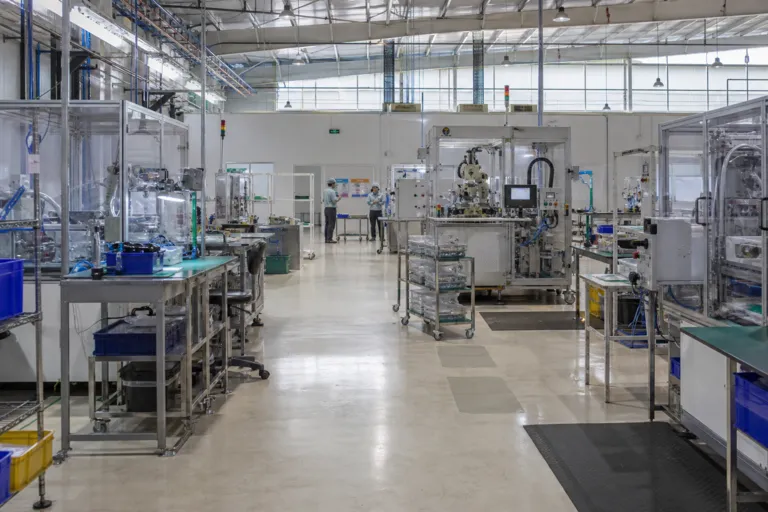
The pathway to ASEAN export leadership is not only about volumes; it is also about capability, compliance, and cross-border alignment. WHX Bangkok and Medtec Southeast Asia 2026 are positioned as a convening point for those priorities, highlighting manufacturing technologies such as automated injection device production systems, precision implant component machinery, and GMP-compliant medical packaging equipment. The event also lists clinical and diagnostic innovations, including a real-time AI system for 12-lead ECG analysis on mobile devices and Liquid Biopsy technology capable of detecting 21 types of cancer from a single blood sample. In parallel, one regional analysis notes that full implementation of the ASEAN Medical Device Directive remains incomplete, with only five countries listed as having implemented it: Singapore, Malaysia, Thailand, Indonesia, and Vietnam. In that environment, the Medtech Manufacturing Hub Thailand narrative increasingly depends on disciplined manufacturing execution and stronger regional coordination.
What is driving Thailand’s move toward ASEAN medtech export leadership?
How large is Thailand’s medical device market and trade flow in 2024?
What does the regional outlook say about Southeast Asia’s MedTech growth?
How does healthcare services strength support manufacturing momentum in Thailand?
What role can events like WHX Bangkok and Medtec Southeast Asia 2026 play for Thailand’s hub ambitions?