
Chronic Disease Management Hong Kong is increasingly being shaped by a policy push to strengthen care in the community rather than relying on episodic hospital treatment. Hong Kong runs a dual healthcare structure with both private care and a government-funded public sector. The Health Bureau sets policies, while the Hospital Authority (HA) manages public hospitals and public healthcare institutions. As of the latest available figures reflecting early 2025 operations or late 2024 data, the HA managed 43 public hospitals, 49 specialist outpatient clinics, and 74 general outpatient clinics, organized into seven geographic clusters. This footprint matters for chronic care because long-term conditions need repeat consultations, monitoring, and steady medication access close to where people live.
System capacity and demographics add urgency to shifting chronic care into more accessible settings. As of the end of 2023, Hong Kong had 36,782 hospital beds, including about 30,636 beds in HA’s 43 public hospitals and 5,294 beds in 13 private hospitals, with a bed-to-population ratio of about 4.9 beds per thousand population. At the same time, population aging is expected to intensify demand: the proportion of people aged 65 and above is forecast to reach 32% by 2041. Life expectancy was reported at 82.5 years for males and 88.1 years for females in 2023. These figures help explain why community-based screening, early intervention, and follow-up are being prioritized.
A New Co-care Network Brings Schemes Together
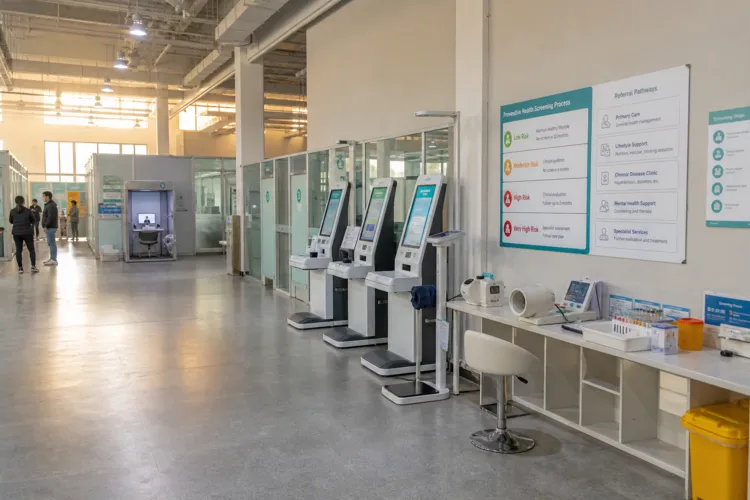
In March 2026, Hong Kong’s Primary Healthcare Commission launched a Primary Healthcare Co-care Network that integrates existing chronic disease initiatives to strengthen community-based services. The network begins operation immediately and will run for an initial five-year phase, with an aim to serve about 700,000 residents. It brings together the government’s Chronic Disease Co-care Pilot Scheme and the Hepatitis B Co-care Scheme on a single platform, with plans to gradually expand to more chronic illnesses and additional services. Authorities also said the network will add services such as medical laboratory testing and radiological diagnostic services to support earlier detection and better management.
The Chronic Disease Co-care Pilot Scheme started in 2023 for patients with common conditions such as hypertension, diabetes, and high cholesterol. Officials said it performed better than expected. As of the end of February (reported in 2026), 213,000 people had enrolled, meeting a 200,000-participant target nearly 10 months ahead of schedule, and about 123,000 participants had completed health screenings. Authorities said the scheme is believed to have helped prevent around 9,000 heart disease cases and about 10,000 deaths, and the government decided to make the scheme a regular service. For the coming financial year, the broader initiative is expected to cost HK$2.6 billion, covering items including subsidies to doctors, community drug formularies, and newly added radiology services.
Financing pressures reinforce why Hong Kong is testing coordinated, community-first pathways for chronic conditions. Recurrent government healthcare expenditure was about HK$105.7 billion (US$13.5 billion) in 2023-24 and is estimated to rise to HK$109.8 billion (US$14 billion) in 2025, with the level described as unsustainable in the long run due to aging, a shrinking workforce, and manpower shortages. While market reports point to broader trends, including a shift from episodic care to sustainable, patient-centered models and the growth of value-based care, Hong Kong’s immediate policy signal is clear: integrate services, expand screening, and build dependable primary care support so that hospitals can focus on acute and specialist needs.
What is changing in chronic disease management in Hong Kong?
How many residents is the new Co-care Network expected to serve?
How has the Chronic Disease Co-care Pilot Scheme performed so far?
What budget is expected for the initiative in the coming financial year?
Why is Hong Kong moving more chronic care into the community?