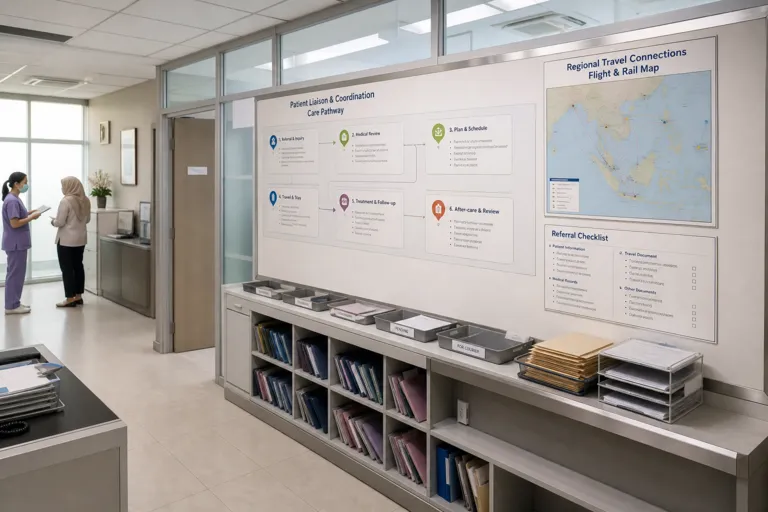
In Southeast Asia, the story is shifting from pure competition to practical coordination as countries try to make cross-border care easier to navigate. One reason is simple scale. The ASEAN medical and wellness tourism market was estimated at USD 66.1 billion in 2024 and is expected to grow from USD 76.5 billion in 2025 to USD 218.4 billion in 2034. Thailand led that ASEAN market with a 47.7% share in 2024. As volumes rise, the winning strategy increasingly looks like a smoother patient journey across the region rather than isolated national campaigns.
Coordination starts with what patients value most: clear quality signals and predictable access. In Thailand, Joint Commission International (JCI) accreditation is described as splitting the competitive landscape into accredited multi-specialty chains and non-accredited local operators. The country’s “Medical Hub of Asia” policy is tied to streamlined non-immigrant MT visas and tax incentives for hospital infrastructure investment. Thailand’s market is also shaped by concentration risk, with over 70% of medical tourist volume flowing through a single metropolitan cluster in Bangkok, creating capacity constraints and price inflation pressure. Those bottlenecks make regional load-balancing and referral pathways more attractive.
From Price-Only Competition to Shared Pathways
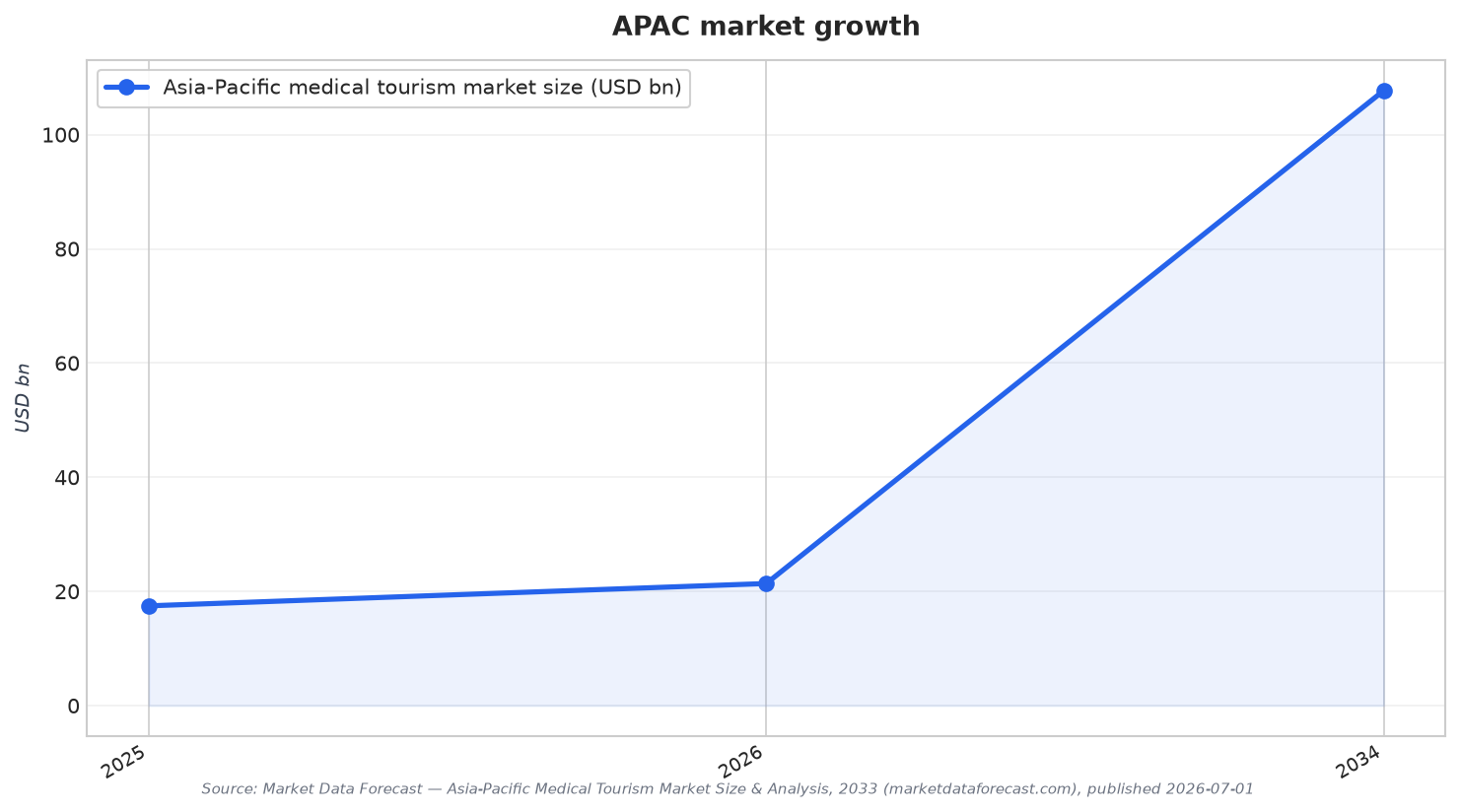
The broader Asia-Pacific context explains why coordination is gaining momentum. One estimate values the Asia-Pacific medical tourism market at USD 17.47 billion in 2025, rising to USD 21.38 billion in 2026 and projected at USD 107.71 billion by 2034, with a 22.4% CAGR from 2026 to 2034. Another estimates Asia-Pacific at USD 70.77 billion in 2026, reaching USD 145.66 billion by 2031 at a 15.53% CAGR. These reports also point to cost-driven demand and formal quality signals, including a network of more than 1,100 JCI-accredited hospitals across Asia-Pacific. With multiple hubs expanding at once, coordination becomes a way to reduce friction without erasing national differentiation.
Cost and treatment mix still matter, but the corridor logic is about routing patients efficiently to the right destination. One analysis cites a structural 40%–80% cost advantage versus OECD providers for elective procedures in destinations such as Bangkok or Chennai. It also notes that medical inflation of 5%–8% annually can temper the cost arbitrage that underpins patient flows. On the demand side, cosmetic and aesthetic procedures held 28.55% revenue share of the Asia-Pacific market in 2025, while private hospitals captured 60.53% share that year. In this environment, coordination can mean shared intake, clearer pricing, and smoother transitions between specialty clinics, private hospitals, and follow-up care across borders.
Several data points hint at how a coordinated ASEAN Medical Tourism Corridor can take shape: visa facilitation, shared professional frameworks, and cross-border patient onboarding. Future Market Insights describes an evolution toward state-backed healthcare export corridors, citing regulatory convergence and ASEAN mutual recognition arrangements for healthcare professionals. It also points to AI-driven cross-border patient triage platforms and the expansion of bilateral visa-free medical travel corridors as notable trends. On the ground, Malaysia’s inbound growth is visible in reported traveler counts: Malaysia Healthcare Travel Council data shows tourists increased from 0.56 million in 2021 to over 1 million in 2023. Together, these elements move the region from competing headlines to coordinated patient pathways.
What does it mean for an ASEAN Medical Tourism Corridor to move from competition to coordination?
How large is the ASEAN medical and wellness tourism market, based on the sources?
What share did Thailand hold in the ASEAN medical and wellness tourism market?
What operational challenge does Thailand face that supports a more regional approach?
What is one sign that medical travel demand is rising in Malaysia?