
AI precision medicine Southeast Asia is moving closer to practical healthcare delivery. A new collaboration between WHO South-East Asia and the University of Colombo shows that the region is investing in more than algorithms and genomics. It is also building the workforce, governance, and institutional readiness needed for responsible implementation.
The two-year agreement runs from 10 July 2026 to 31 July 2028. It will support regional competency frameworks, executive leadership programmes, fellowships, mentorship, and training for clinicians, educators, researchers, and policymakers. Baseline and follow-up AI-readiness assessments will also help participating health systems measure progress.
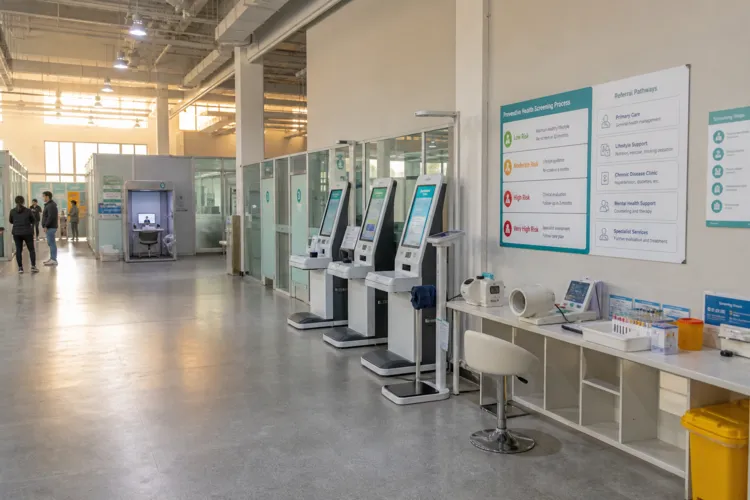
This approach reflects an important shift. Precision medicine is often associated with specialist hospitals and costly treatments. The new programme instead places primary healthcare at the centre. Its focus includes noncommunicable disease risk stratification, preventive care, pharmacogenomics, and maternal and child health.
Building the System, Not Only the Technology
The scientific potential of AI-enabled precision medicine is growing. Yet technology alone cannot deliver reliable or equitable results. Health systems also need good data, trained people, suitable infrastructure, clear accountability, and long-term funding.
A 2026 scoping review examined 44 studies on medical AI deployment in low-resource settings. Data-quality and local-capacity problems appeared in 81.8% of the studies, making them the most frequently reported barrier. Ethics and governance concerns appeared in 65.9%, while policy and sustainability challenges were reported in 59.1%.
These findings suggest that the main limit is no longer scientific possibility. It is system readiness. Fragmented records can weaken model accuracy. Limited AI skills can make implementation harder. Weak governance can create uncertainty around consent, privacy, bias, accountability, and clinical oversight.
The WHO and University of Colombo programme addresses these issues directly. It includes governance and ethics frameworks, policy consultations, genomic-data governance, and practical implementation knowledge for low- and middle-income countries. It is designed to prepare people and institutions, rather than introduce technology without the systems needed to sustain it.
Representative data will be equally important. The ASEAN Genome Consortium argues that coordinated and inclusive regional datasets are needed to support equitable precision medicine across Southeast Asia. This matters because tools trained on populations that do not reflect local diversity may produce less relevant results for regional patients. Shared infrastructure can also help countries gain more value from limited resources than isolated national programmes.
Without representative regional data, precision medicine could repeat the inequalities it aims to address. With stronger collaboration, Southeast Asian health systems can build tools that better reflect local populations, disease patterns, and treatment responses.
Turning Primary Care into a Platform for Precision Medicine
Primary care offers a practical route to scale. It is where health systems can identify risk earlier, support prevention, manage chronic conditions, and reach broader populations.
Risk-stratification tools could help care teams identify patients who need earlier support. Pharmacogenomics could help guide medicine choices based on individual characteristics. Maternal and child health applications could support more targeted monitoring and intervention. The goal is not to replace clinical judgement, but to give healthcare professionals stronger evidence for decisions.
The wider regional environment is also becoming more supportive. Southeast Asia’s digital healthcare market is forecast to grow by 8.6% annually between 2024 and 2028. This creates a stronger foundation for investment in healthcare data, digital platforms, workforce skills, and implementation support.
Asia-Pacific providers are already looking beyond basic automation. Around 75% believe agentic AI can deliver greater productivity gains than generative AI without agents. By 2028, 45% of regional healthcare organisations are expected to advance agentic AI-enabled engagement, with stronger attention to trust, cultural alignment, and digital equity.
These developments do not mean precision medicine will scale automatically. Healthcare leaders still need to select realistic use cases, assess readiness, improve data quality, train teams, define governance, and measure outcomes before expanding.
For health systems, technology companies, laboratories, pharmaceutical businesses, and investors, the emerging opportunity lies in building the capabilities around precision medicine, not only the tools themselves. From our consulting perspective, the strongest initiatives will connect local data, primary-care needs, workforce development, governance, and viable implementation models. This can help transform precision medicine from a specialist concept into a practical platform for preventive and personalised care across Southeast Asia.