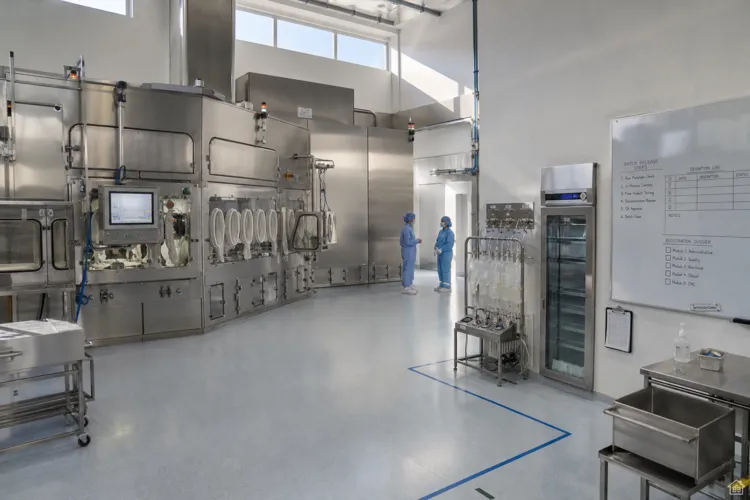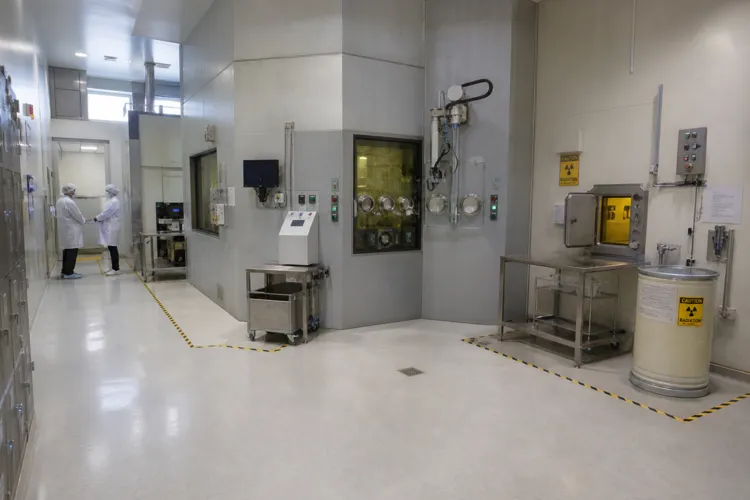

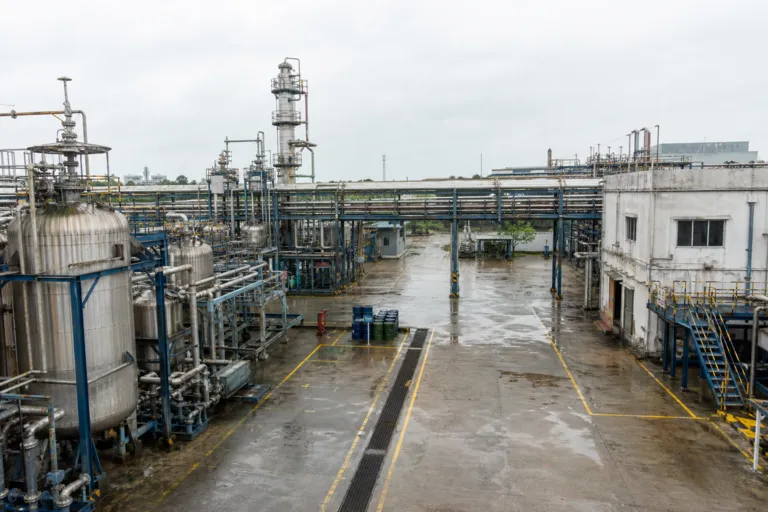
Bangladesh’s pharmaceutical industry has built a strong domestic base in finished-dose production, meeting about 98% of national medicine demand. Export performance has also climbed, with EPB data placing pharmaceutical exports at $213.16 million in FY25 across 166 countries, up from $103.46 million in FY18. This growth sits on a domestic market described as roughly $3.5 billion, where local firms supply about 98% of demand. Yet the sector’s next competitive test is backward integration, because the core input—active pharmaceutical ingredients—still comes mostly from abroad.
The import dependence is large and expensive. One analysis reports the sector imports more than 85% of APIs, mainly from China and India, with an annual import bill of about $1.3 to $1.5 billion. Other reporting frames the same reality from the factory floor: while around 98% of medicines are made locally, industry insiders put API import reliance at around 90%. This gap is why Active Pharmaceutical Ingredient Manufacturing Bangladesh is increasingly discussed as a supply-security issue as much as an industrial policy goal, especially after supply shocks highlighted how quickly API disruptions can become production risks.
LDC Graduation Raises the Stakes for Local Value Chains
The push for import substitution is also shaped by a policy deadline. Bangladesh loses the WTO TRIPS pharmaceutical waiver on November 24, 2026, because graduation ends the benefit even though the waiver runs to end-2033 for countries that remain LDCs. The exposed slice is described as narrow but high-value: roughly one-fifth of the domestic pipeline is patented, compared with about 80% generic. Without an extension, new launches in the patented slice would need patent clearance, licensing, or compulsory licensing. The same analysis argues the most valuable immediate move is to secure a post-graduation extension, because API capacity and related upgrades are multi-year builds.
Policy and investment levers are moving in parallel. Bangladesh has filed for a 3-year graduation deferral and is separately lobbying to extend the pharmaceutical waiver to 2029, with the Maldives extension cited as a public-health precedent. On the industrial side, the API Industrial Park in Munshiganj—reported as under construction in Gajaria, Munshiganj—is positioned as a major step toward backward integration, and industry leaders expect it to ease raw-material constraints once fully operational. The FY2026-27 budget also adds a cost-focused nudge by granting full duty exemption on 51 new API raw materials to push local production.
Import substitution is not only about volumes; it connects to the type of medicines Bangladesh wants to make and export. The industry is described as investing in biologics, immunotherapies, and API production while targeting more complex medicines that require advanced research and stringent regulatory standards. Export reach is described as extending to 157 countries in one account and 166 countries in another, alongside references to US FDA, UK MHRA, and EU GMP-certified plants for select facilities. In practice, the near-term pathway combines negotiated time under TRIPS flexibilities with steady build-out of domestic API capabilities, so competitiveness is protected while dependence on imported inputs is reduced.
Why is Bangladesh prioritizing import substitution for APIs?
What happens to the TRIPS pharmaceutical waiver when Bangladesh graduates from LDC status?
How does Active Pharmaceutical Ingredient Manufacturing Bangladesh fit into the industry’s next growth phase?
What government measures are mentioned to support local API-related production?